
European firms stay resilient despite uncertainty, says new EIB report
- Dec 10, 2025
- 2 min read
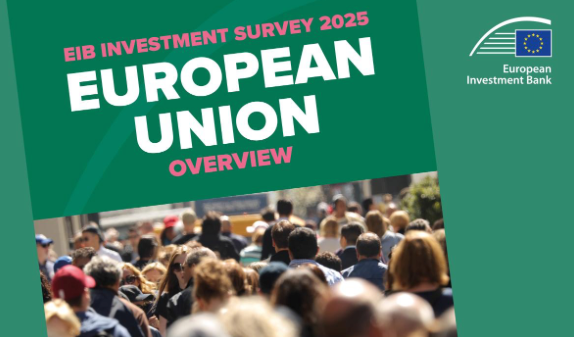
The European Investment Bank has released the 2025 edition of its EIB Investment Survey, covering more than 13,000 firms across all EU Member States. The findings show that, despite a turbulent global environment, most European companies continue to invest and adapt.
Key insights
Investment remains strong. 86 percent of firms plan to invest this year, only slightly below 2024. Appetite is steady but more cautious.
Focus on renewal rather than expansion. EU companies invest more to replace existing assets, while US firms are more geared toward capacity growth.
Rise of intangible investment. A third of all spending goes to R&D, training and digital tools, confirming a structural shift away from traditional assets.
Supply chain and global pressures
Firms remain deeply integrated into global supply chains. Rather than cutting imports, most are diversifying suppliers to boost resilience. The preference is for adjustment, not restructuring.
Digitalisation and AI gaining ground
EU companies now nearly match US peers in digital adoption.
Advanced digital tools: 77 percent
Generative AI: 37 percent, slightly above the US
The next step for Europe is deeper integration of AI across business processes.
Climate action remains a priority
92 percent of EU firms have taken steps to cut emissions. Investments span renewable energy, sustainable transport and waste reduction. More companies see climate policy as an opportunity rather than a threat.
What is holding firms back
Ongoing economic and geopolitical uncertainty
Fragmentation of the Single Market
Administrative burden, especially for SMEs
Mixed access to external financing
Simplifying regulation and improving financing conditions remain key levers for competitiveness.
What this means for investors
The data reinforces several themes.
Digitalisation and the green transition continue to drive investment decisions.
Companies prioritise resilience and efficiency, creating opportunities for value creation, consolidation and innovation.
Energy transition, digital infrastructure and supply chain optimisation remain strong long-term investment themes.


Comments